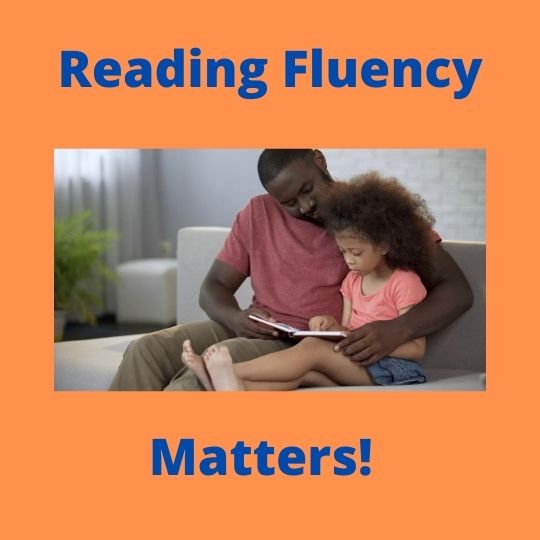
Reading fluency is the ability to read without even thinking about how to say each word on the page. Good readers sound like they are talking instead of reading. Fluent readers can be compared to a runner who has spent years training her body to run a marathon without getting tired. Her body is so conditioned for this skill that she no longer thinks about her running technique. In the same way, a good reader trains her brain to read the words on a page without noticing each sound a letter makes. She reads the words automatically at a pace that sounds conversational.
As an educator, I work on student’s reading fluency so they can be confident readers. It is important to never make a student read aloud in class; I only call on students who volunteer. This philosophy came from having a younger brother who felt embarrassed when teachers made him read in front of the class. I can still remember how bad he felt on these days. As a teacher, it is my job to lift up students up and equip them with the necessary skills they need to become strong readers.
However, some students will just need more practice than the classroom setting can provide. One of the ways we can help our children is to notice the signs that indicate our child needs help.
For example, does your child,
*Read Slowly
*Read without expression
*Stumble on words often
*Struggle explaining what was read
The good news is that parents make a good fluency coach for their children. I have listed the areas that parents can help their child with their oral fluency.
The Goals of Reading Fluency:
- Phrasing- the ability to group words together in a meaningful way. Help your child to scoop words together in phrases. Teach them that it is okay to go back and re-read in order to smooth the words out and make it less choppy sounding.
- Expression– the ability to read the words with feeling by paying attention to punctuation and dialogue speaker tags. First, have them practice making it sound interesting by adding emotion to their voice. Secondly, have them pay attention to the end punctuation and the way the dialogue tells how it should be read (i.e. whispered, shouted). Lastly, have them get into the character’s feeling.
- Pace– the ability to read at a rate that mirrors the rhythm of talking. Teach your child to sweep her eyes across the line-trusting her brain to store those words in her photographic memory. Also have the child practice reading the whole sentence in one breath to pick up speed. Increasing your child’s speed happens when a child is familiar with the text. So you will want the child to re-read the text more than once so they are familiar and comfortable. While timing a child’s speed can be fun-beware of what I call the STOP WATCH effect. This is when kids might start to focus too much on their performance while reading a piece of text verses understanding what it is they are reading.
Reading Fluency Helps Comprehension
Reading to “sound good” is not the main reason why educators care about your child’s reading fluency. There is a direct correlation on your child’s ability to read with “automaticity” and how well she comprehends what she reads.
“A study conducted by Florida State University and the Florida Center for Reading Research found that growth rate in oral fluency was the greatest predictor in a child’s ability to develop reading comprehension skills. Additionally, the study found that primary school children in third and sixth grade who made inappropriate pauses, mistakes in content, and inconsistencies in pitch—all indications of an oral fluency struggle—were less skilled in reading comprehension.”-fueleducation
Remember parents you play a critical role in making sure your child is a fluent reader. For one, you are your child’s biggest fan. Your praise and encouragement matters the most in their eyes. So support your child to keep training and setting reading goals. If you would like more specific tips on how to incorporate oral fluency practice into your daily routine, please click the link to view these strategies. I have used these at-home tips to strengthen my two boys reading fluency. Happy reading!
